How To Transport Farm Equipment: Safety Tips (2022)

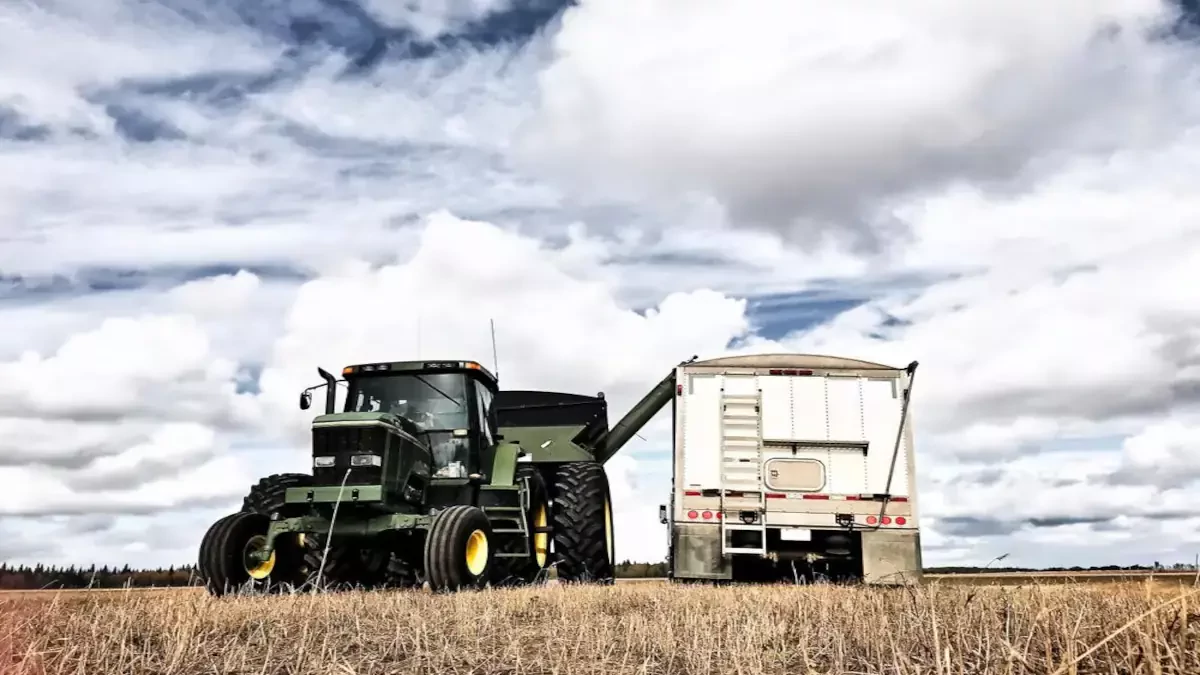
It’s quite common to see farm equipment traveling on public roads in rural communities, especially during harvesting months like summer and spring.
However, farm equipment cannot travel long distances, so most owners find transporting farm machinery a daunting task.
If you want to know how to haul conveniently, follow our tips below.
How Long Does It Take To Deliver?
Based on most companies, it’ll take one to three business days for short-distance deliveries.
Alternatively, equipment may take a few more days for longer distances for obvious reasons.
While professional services promise faster shipment time frames, It’s hard to give an exact shipment time frame for moving unless the final destination and trailer hauling have already been decided.
In Conclusion
Hauling needs careful planning to execute the hauling safely. Planning allows you to score cheaper options for your needs.
We also suggest preparing it, checking its attachments and implements, and securing permits if necessary before moving.
The farm equipment type should also be considered. Moving four-wheel drive tractors could be more expensive than compact utility tractors, depending on the company's service package.
To haul hassle-free, go with A1-AT. Our experienced specialists can handle all types of industrial equipment.
References:
Frequently Asked Questions
What is the typical cost to ship a car from Maryland to Utah?
Most Maryland to Utah car shipments cost $1,200 to $1,700, based on recent national carrier quotes for long-distance routes. Prices rise with heavier vehicles, lifted SUVs, oversized pickups, and limited-access pickups in rural Utah. Seasonal surges in late summer and winter weather around the Rockies can also influence rates. For broader cost guidance, see our car shipping rates at car shipping rates.
How long does Maryland to Utah auto transport usually take?
The trip generally runs 5 to 8 days, depending on the driver’s route, weather, and stop frequency. Carriers often cross Ohio, Indiana, Nebraska, and Wyoming en route to Salt Lake City or surrounding areas. Delays are more common in winter due to high-elevation mountain passes. Booking earlier helps secure better timing.
What is the safest transport type for long-distance routes like Maryland to Utah?
Open transport is the most common, but enclosed carriers offer extra protection against snow, dust, and road debris along western routes. Enclosed transport is often used for high-value or custom vehicles. Learn more at enclosed.
Can I ship an inoperable vehicle from Maryland to Utah?
Yes, but expect an added fee because carriers need a winch, liftgate, or special loading equipment. The condition of the brakes, steering, and tires affects how quickly the vehicle can be positioned on the trailer. If the pickup or drop-off location is tight or on a slope, a flatbed may be required.
Do carriers offer door to door service from Maryland to Utah?
Yes, most transports include door to door delivery as long as the carrier can access your street safely. Urban Maryland neighborhoods sometimes require meeting at a wider road or parking area. Utah’s rural regions may also require a safe meetup point. More details available at door to door auto transport.
What factors influence Maryland to Utah auto transport pricing the most?
Key cost drivers include distance, vehicle size, seasonality, carrier availability, and pickup flexibility. Larger trucks and SUVs raise pricing, while flexible pickup windows often reduce it. Utah’s mountain weather and Maryland’s urban traffic patterns can also affect routing and fuel costs.
How should I prepare my vehicle before pickup?
Wash the exterior, remove personal items, and document current condition with photos. Carriers regulated by the FMCSA require accurate inspection reports. Keep fuel at one-quarter tank, secure loose parts, and ensure the battery is charged for efficient loading.
1) Plan Out the Details

All farm equipment owners must plan every detail to properly and safely haul/transport farm machinery.
First, you must determine how much you are willing to pay for the transportation.
Generally, the overall shipping price determines whether you would want to hire professional shipping businesses or not.
Next, you need to determine what trailer truck would be used as the transport vehicle. Flatbed and lowboy tractors are generally used for loading and transporting agricultural equipment.
If the total weight of the farming equipment is not more than 48,000 lbs, with 40’ to 50’ in length, up to 9’ high, and up to 8.66’ wide, a lowboy hauler should be used.
Lastly, you need to prepare your equipment. Always include pictures of your farming equipment in your plan so that you’ll have evidence in case it gets damaged from any accident during transport.
2) Find A Professional Transport Company
Another tip we recommend when hauling/transporting farming equipment is to find a professional transport company.
It’s easy to find shipping companies now because they have legit websites you can easily find on the internet.
To save time, you can also get a free shipping estimate from some shipping companies to determine whether your allotted money for the farm equipment transport is enough.
You can easily get the best rates and services in the comfort of your home.
Professional transport businesses also provide skilled drivers and knowledgeable staff for high-quality services. Their job is to provide a safe hauling service.
Most hauling services also offer insurance and door-to-door delivery when you avail of their farm equipment transport service packages.
Some hauling businesses will also take care of necessary licenses if your heavy equipment is oversized, so the farm equipment transport would be as smooth as possible.
3) Secure Permits
Another tip we recommend is securing permits before transporting farm equipment.
Some states require specific licenses and paperwork before the haul, especially if the load/equipment is oversized.
The rules and regulations of transporting farm equipment/tractor vary from state to state, so we always recommend working with your local Department of Transportation (DOT) [1] offices. You can also contact the DOT office where the farm tractor will be shipped.
4) Consider Attachments & Implements
The next things you must consider when shipping farming equipment are the attachments and implements.
Some farm equipment/tractors can be shipped separately, so you need to check with your transport equipment company.
You might be required to take out integral parts, components, or vulnerable pieces, like tires, and ship/haul them separately.
We recommend arranging another delivery to haul/ship them prior to the main body, so you won’t be paying additional costs for the trailer to stay onsite until the attachments arrive.
Additional service or time may cost you more because of the additional job.
The farm equipment’s height, weight, and width also determine the trailer that must be used to ship it, so always check for the equipment’s clearance before the haul.
If the agricultural machinery is too wide, you can remove the wheels and tires prior to the tractor shipment. You can either ship them separately or hire another trailer to load them onto.
You can also remove the equipment’s booms so it won’t be too long and could fit into the trailer truck.
Removing some parts from the chassis will also help solve any overweight designation. Shipping tractors with lighter loads is always cheaper than wide-load heavy machinery.
5) Prepare Your Farm Equipment
Did you know that properly preparing any farm equipment helps every farm owner find the best but cheapest trailer possible to ship farming machinery?
By determining the attachments and implements of the equipment, you’ll know whether it’s best to ship the farm equipment/tractor separately or not. You will also know the best trailer to transport farm machinery safely.
It’s also recommended to wash your farm equipment and take out all your personal belongings and all the parts that need to be delivered separately prior to the shipment.
Flatbed trailers [2] are usually the cheapest farm equipment transport vehicles, but a lowboy trailer or a low-loader can also be used to ship a farm tractor/vehicle.
6) Agricultural Equipment Usually Shipped

Most agricultural equipment usually shipped across different states are:

 Share on Facebook
 Share on LinkedIn
 Share on Twitter
 Google
  Instagram
 Dave C.
  Courtney J.
  Jeff D.
  Maria L.