Overview of Heavy Haulers for Agricultural Machinery | Agricultural Equipment

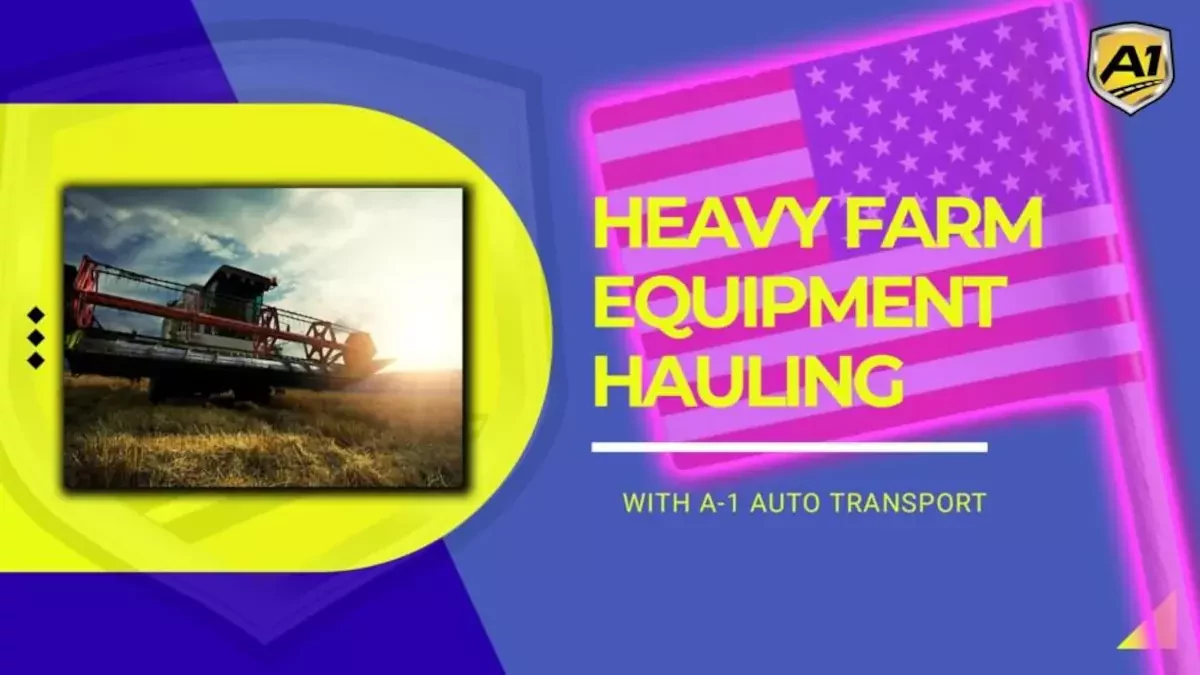
Agricultural Transporting: Heavy Equipment Transport of Farm Machinery
This article discusses everything about heavy equipment transportation by professional haulers, focusing on machinery. Moving it is no easy feat; it requires the right tools, specialized knowledge, and the right company to ensure safe and efficient delivery. Agricultural equipment is generally large and heavy. Whether you're a farmer needing to haul, combine harvester, or balers or a dealer needing to deliver a piece to a customer, this post is designed to guide you through. We'll dig into the nuances, addressing the challenges one might face, and our firm's solutions to tackle these obstacles or any other contingency during delivery.
New Deals are now available for shipping all types vehicles using our vetted reliable shippers. Compare price estimates & Unlock up 25% off.
Farm Equipment Hauling: The Challenges
Transporting it is a tedious and demanding task. There are several challenges to overcome when hauling, especially for an individual venturing into it alone; Some of these challenges are:
Oversized and Heavy Loads
When hauling especially combined machinery, one common challenge is dealing with oversized and heavy loads. These are typically larger and heavier than standard freight, making them difficult to deliver. Oversized loads require special routing and permitting, which can be a complex and time-consuming process for those who are unaccustomed to it.
Proper Loading and Unloading
Properly loading and unloading is a significant challenge. If not done correctly, it can lead to damage or even accidents. It requires professional knowledge and the right equipment to ensure a safe and efficient process.
Timely Delivery
Because farming is a seasonal industry, timely delivery is of the utmost importance. Delays could lead to increased costs and potential losses for farmers if they cannot begin on time.
By hiring professional agencies, these challenges can be mitigated. They have the experience, special shipment, solutions, and trained personnel to deal with gear of oversized loads, ensure proper loading and unloading, and guarantee timely delivery.

What is the Transporter?
Due to their weight and size,movers need to make special considerations when moving them. The following section explains the types, companies can haul, and the tools they use to move them.
Why People Haul It
- Heavy Equipment Hauling For Relocation of Operations
- Seasonal Migration Equipment
- Trade Shows and Exhibitions
- Hauling for Purchase or Sale
- Moving for Maintenance and Repair
- Dispatching for Upgrades
Factors to Consider When Choosing a Firm
There are several factors to consider when choosing a corporation. As said earlier, the weight and size make delivering them require special requirements when compared with hauling cars and the like. Below are some vital factors to consider:
Experience and Expertise
A company's experience and expertise matter significantly when it comes to hauling. Look for an enterprise that has a proven track record in the industry. They should have handled various types and faced a multitude of situations. Their hauling experience equips them to tackle any unforeseen challenges that might arise.
Why Experience Matters
Experience is directly linked to the ability to safely and efficiently deliver. An experienced one understands the intricacies of loading, securing, and unloading without causing any damage.
Licensing and Insurance
Ensure that your company is fully licensed and insured. Licensing guarantees that the enterprise complies with all the regulations and standards. On the other hand, insurance provides you with peace of mind knowing that you won't have to bear the financial burden in the event of any damage or accident during transit.
Importance of Insurance
Insurance is a safeguard against any potential financial risk associated with the move. It's not just about the cost of repairs or replacement but also about the potential loss of income if it is out of service for an extended period.
Tools and Resources
The type of tools and resources a company has can significantly influence transportation. They should have the necessary solution, trailers, and hauling to move. Additionally, their team should be equipped with the right tools and safety gear to ensure a safe and efficient process.
Role of Proper Gear
It is key to ensuring its safe and efficient delivery. It reduces the risk of damage and enhances the efficiency of the process. These types include lowboy, neck trailers, and more.
Customer Service
Good customer service is another crucial factor to consider for services. The firm should be responsive, helpful, and ready to answer any questions or concerns you might have before, during, or after the delivery.
Why Customer Service Matters
Customer service plays a pivotal role in ensuring a smooth and stress-free process. It fosters an open line of communication, keeping you informed and reassured throughout the process.
A good customer service team should also be ready to handle any unforeseen issues, reducing the risk of delays or other problems.
Quality Assurance
Finally, quality assurance is essential for successful moving. The agency should have a strict quality control system in place that covers all stages of the process, from loading and unloading and delivery. This helps to ensure safety and reliability.
It is also important to look for a firm that offers tracking services so you can keep tabs on it during the process. This helps to provide peace of mind, knowing where it is at all times.
Varieties of Services in the Market
There are different necessities on the farm for smooth running and maximum productivity. Some of these vital tools are listed below.
Types
Essential Tools
This is the most used machinery in everyone. Its purpose is to pull supplies and heavy objects required in production. At the back, it has 2 big wheels, and at the front, it has 2 smaller ones. Modern tractors have durable body and wheels, temperature control, comfortable seats, and services. A Lowboy trailer can be used to haul.
Types:
- Utility tractor,
- Farm tractors with a four-wheel drive,
- Compact utility tractors,
- Row Crop Tractors,
- Tractor Tiller Transport
Cultivators
Through pulverizing and mixing, the soil is cultivated before planting. By doing this, the soil is aerated. Similar to a tractor, a cultivator has 2 large back wheels and 2 large front wheels. Once it is operational, it also has teeth/shanks to cultivate the ground.
Types of Cultivators
When selecting a service, it’s important to understand the different types of cultivators available. There are three main types: traditional tillers and garden plows, vertical tillers, and disc harrows.
- Traditional Tillers & Plows- These tools use a blade or disk attached to the back of a tractor to break up soil and cultivate the land. They are great for preparing large, open areas of land before planting crops.
- Heavy Vertical Tillers - These use a single vertical blade that rotates against the soil to break it up. This type of tiller is great for cultivating narrow spaces, such as vegetable patches in small gardens.
- Heavy Disc Harrows - Disc harrows are similar to traditional tillers and plows, but instead of cutting through the soil with a blade, they use several rotating discs to break up the ground. They are ideal for tilling large fields before planting crops.
Broadcast Seeder
This machine is linked to a tractor to spread the seeds throughout the land. A hopper with rotor blades holds the seeds. The broadcast seeder uses spinning disks to allocate the seeds in various patterns. It can also be a combined one.

Harvester Hauling
As the name implies, the harvester is used to harvest all sorts of grains. The chops up the plants, gets rid of debris, and recovers the product.
Supplies Used
Before the process can begin, haulers require the following information:
- What is equipment, and how many do you need to be delivered;
- Each vehicle’s name, model, and make;
- Each vehicle’s dimensions: weight, length, width and height;
- The origin and destination points.
- A few times and dates on which you’d like them to pick up and deliver your automobile.
Once this information is provided, they will decide what carrier to use amongst the following:
- Flatbed truck or trailer: This kind of truck can be rigid or articulated. As suggested by the name, its trailer is a flatbed with no roof or sides. Because of this, gear can be easily loaded and carried on it and the trailer drive moves it to its destination. This kind of trailer/truck is not recommended for weather-sensitive equipment. It is best used, which needs more space than provided by a closed trailer.
- Removable Gooseneck Trailer: RGN trailers can be used to haul heavier and taller loads than most other trailers. Once you’ve detached the removable gooseneck from the trailer, you can load vehicles freely without the need for a ramp.
- Double Drop Trailers: They’re normally used so that you can drive on them, such as combines, cranes, forklifts, and other cargo.
- Lowboy Trailers are semi-trailers whose deck height drops twice: before the wheels and after the gooseneck. Thanks to this, the deck is very close to the ground, making it ideal for movers who want to move tall machines.
Relevant Statistics
- Tools transporters save farmers an average of $2,500 per year on costs.
- Over 90% of haulers are equipped with specialized trailers for safe and efficient delivery.
- The average weight capacity is 25 tons, allowing for the moving.
- They reduce carbon emissions by up to 30% compared to traditional methods.
- Approximately 80% of farmers rely on transporters ensuring timely and reliable delivery.
General Facts
- It is a specialized vehicle used to haul gear.
- They are designed with sturdy frames and ramps to safely load and unload agricultural machinery.
- These can deliver a variety, including tractors, harvesters, plows, and sprayers.
- They often have hydraulic systems to assist in lifting and lowering it.
- They play a crucial role in modern agriculture by enabling efficient movement between different fields or farming operations.
Other Carriers They May Use
- Step Deck Trailers
- Specialized Trailers;
- Extendable ones;
- Lowboy ones;
- Hot Shot.

A1-AT is an experienced professional company. We are known for moving other equipment like harvesters, sprayers, seeders, planters, trucks, and their parts, components, and attachments. Dispatching need not be a problem for you; whether you a moving them within a state, between states, across the country, or to an international destination in Canada, our experts and specialists are here to ease you of the work and worry. We will handle everything for you including customs paperwork. Give us a phone call today and put the rest in our care.
Frequently Asked Questions
What types of agricultural machinery can be shipped?
Agricultural machinery shipping can cover tractors, combines, balers, planters, sprayers, loaders, harvesters, skid steers, irrigation equipment, and detachable implements. The important transport details are the machine's actual length, width, height, operating weight, and whether it can move under its own power. Large headers, dual wheels, booms, or other attachments may need separate positioning or removal to fit the selected trailer. Non-running equipment can also move when the loading plan accounts for the required winch, crane, or other equipment
How does agricultural machinery shipping work?
Agricultural machinery shipping starts with confirming the machine's dimensions, weight, operating condition, and pickup and delivery access before assigning the trailer. A heavy equipment transport service then plans loading, any required permits, the legal route, and securement before the truck leaves. For wheeled or tracked machinery weighing 10,000 pounds or more, federal regulations include specific heavy-equipment securement requirements. The shipment finishes with unloading and a condition check at delivery.
How much does it cost to ship farm equipment?
As of August 8, 2026, many domestic tractor shipments run about $700-$3,000 for roughly 100-500 miles and $2,000-$7,500 for about 1,500 miles or more. Larger combines, self-propelled sprayers, permitted RGN loads, and difficult loading situations can exceed those bands. Distance, transport dimensions, trailer type, permits, and loading requirements account for most of the difference between quotes. A heavy equipment shipping calculator can narrow the estimate once the exact machine and route are known.
How long does farm equipment shipping take?
Loaded domestic farm-equipment transit typically takes 1-3 days for short hauls, 3-7 days for roughly 200-1,000 miles, and 5-10 days for long-distance or cross-country moves. Those ranges describe travel after loading rather than the time needed to assign a truck and schedule pickup. Oversize permit processing, restricted travel windows, weather, or difficult rural access can extend the schedule. For a large combine or another permitted load, confirm pickup timing separately from the loaded-transit estimate.
What shipping method is used for agricultural machinery?
Domestic agricultural machinery usually moves on flatbed, step-deck, lowboy, or RGN trailers, while overseas shipments may use RoRo, flat-rack, container, or breakbulk service. Flatbeds suit equipment that stays within the trailer and route limits, while lower-deck trailers help with taller machinery. RGNs allow many self-propelled machines to load from ground level. For ocean transport, heavy equipment RoRo shipping is often considered for machinery that can roll aboard, while oversized or partly disassembled equipment may need flat-rack or breakbulk handling.
How do I prepare farm equipment for transport?
Prepare farm equipment by cleaning it, confirming transport dimensions and weight, securing removable parts, and documenting its condition with photos before pickup. Check for fluid leaks and tell the transporter if the machine does not run, steer, or brake normally so the correct loading equipment can be arranged. Fold, lower, lock, or remove attachments when the transport plan requires it, and keep loose tools or accessories off the machine. A1's heavy equipment preparation guide covers additional preparation steps.
When does farm equipment need oversize or overweight permits?
Farm equipment needs oversize or overweight permits when the loaded vehicle exceeds the legal limits that apply on the states and roads in its planned route. FHWA generally identifies 102 inches, or 8 feet 6 inches, as the National Network width limit, with states administering permits for wider loads and their own applicable operating conditions. Height, axle weight, gross weight, escorts, and permitted travel periods can also vary by jurisdiction. The carrier should determine the required permits from the machine's loaded dimensions and the actual route before movement.
How do I verify a farm equipment hauler before booking?
Before booking interstate farm equipment transport, verify the company through FMCSA and confirm whether you are dealing with the motor carrier or a broker arranging the shipment. FMCSA's Company Snapshot can be searched by USDOT number, MC/MX number, or company name and shows identification and safety information. Its Licensing & Insurance records can confirm the relevant operating-authority status. Ask who will physically haul the machinery, confirm the trailer fits the load, and review the carrier's current cargo-insurance documentation before pickup.

 Share on Facebook
 Share on LinkedIn
 Share on Twitter
 Dave C.
  Courtney J.
  Jeff D.
  Maria L.
  Google
  Instagram
  BBB
BBB