How to Transport a Tractor: Hauling Tips (2022 Updated)

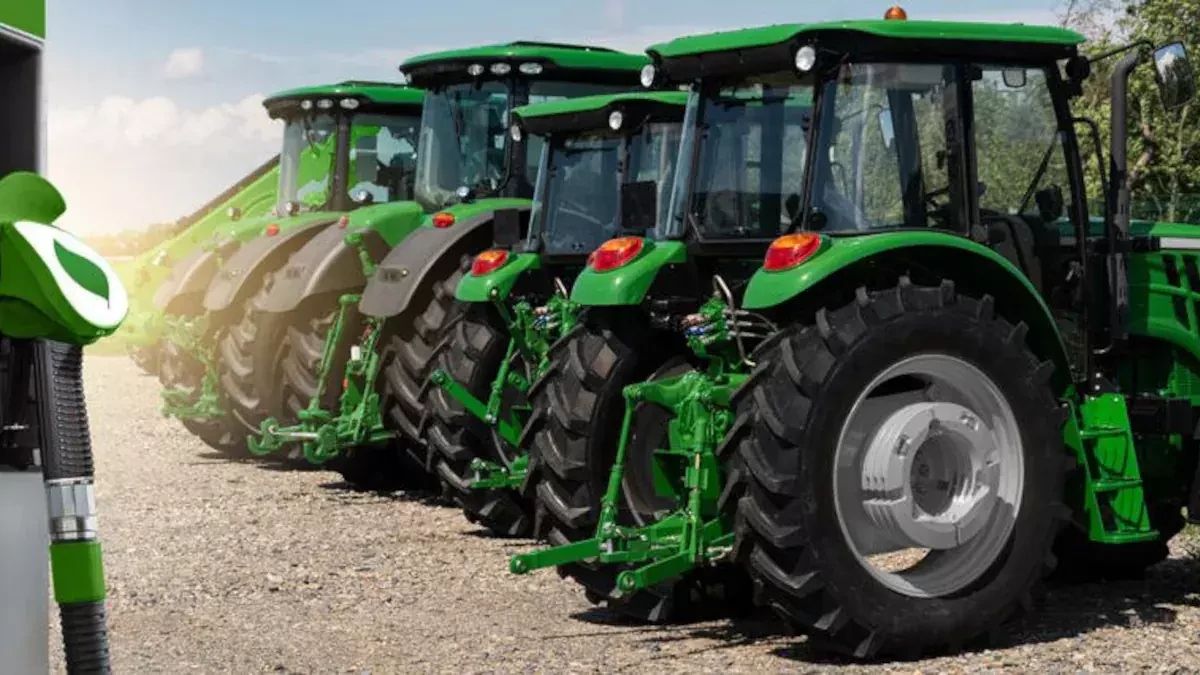
Hauling a tractor doesn’t have to be slow and dangerous. It shouldn’t be difficult to transport from one field to another.
But how do you transport a tractor without jeopardizing the safety of other vehicles on the highway?
Learn how to transport a tractor like a pro with these five easy tips.
How Much Does It Cost To Transport A Tractor?
Generally, you’ll pay between $2 to $3 per mile to ship a tractor. However, the cost of transporting a tractor varies depending on its size, weight, dimensions, shipping time frame, and point of distance.
Smaller tractors are easier to haul and ship, so their shipping will likely be less expensive than larger or bulkier tractors.
Trailers transporting your tractor may charge more depending on how heavy your tractor’s load is.
The longer the distance, the higher cost of shipping because it requires more expenses like additional gas and time to travel.
The delivery time frame also affects the cost of shipping. You’ll have to pay more if you want your tractor to be delivered in a shorter time. Rush hauling requires extra fees and expenses.
New Deals are now available for shipping all types vehicles using our vetted reliable shippers. Compare price estimates & Unlock up 25% off.
Container vs Open-Air Transport
If you want to save more money and aren’t afraid your tractor may get dirty along the way, open-air shipping is your best choice.
This shipping method is the simplest and cheapest way to transport your tractor.
Your tractor [2] will be shipped through a flatbed trailer, where it will be securely tied down using chains, straps, or fasteners.
Flatbed trailers are usually safe for transport; the only downside is that your tractor might be exposed to elements such as mud and dust.
Alternatively, your tractor can be shipped through a container.
This is more costly than open-air transport, but it can ship your tractor without exposing it to unwanted elements, even in direct sunlight.
This method is your best choice if you are after your tractor’s protection.
- Tractor transport averages $2–$3 per mile, with total costs ranging $300–$3,500 depending on size, weight, distance, and trailer type required.
- Flatbed and gooseneck trailers are the standard transport methods; tractor must be secured at minimum four anchor points using heavy-duty ratchet straps or Grade 70 chains.
- DOT oversize permits are required when loads exceed 8.5 ft wide, 13.5 ft tall, 65 ft long, or 80,000 lbs; state-specific limits and county permits may also apply.

What Permits Are Needed To Transport A Tractor?
You might need to secure an oversize/overweight load permit if your tractor dimensions exceed the standard legal or federal limits.
The Department of Transportation (DOT) typically requires a load width of 8.5 ft, 13.5 ft for height, 65 ft in length, and up to 80,000 lbs.
However, these limits vary depending on the state, so we recommend working with your local DOT offices before the transportation.
You’ll also need Oversized/Overweight City and County permits if your tractor exceeds the load capacity. Some cities require permits to protect the city roads and other public properties.
In Conclusion
There are five easy steps to follow when transporting a tractor, locally or internationally.
First, you must know the local and state federal laws about shipping tractors. Then, choose the right transport vehicle and prepare and secure your tractor for transport.
We recommend hiring professional haulers like A-1 Auto Transport to ship your tractor to avoid all the hassle.
We work with experienced logistics specialists nationwide to ensure the safety of your equipment and machinery.
References:
Frequently Asked Questions
How do you transport a tractor on a trailer?
To transport a tractor on a trailer, first confirm its transport-ready dimensions and weight, including any loader, mower, ballast, or other attachment staying with it. Match those figures to the trailer's available payload, deck size, and loading method. Load on firm, level ground using ramps or an RGN designed for the machine, and position the tractor for proper trailer axle loading before securing it. Larger machines or longer moves are often better suited to professional equipment hauling services. Follow the tractor and trailer manufacturers' loading instructions throughout the process.
How do you tie down a tractor for transport safely?
For a tractor weighing 10,000 pounds or more in interstate commercial transport, 49 CFR 393.130 requires at least four tiedowns restraining the machine forward, rearward, laterally, and vertically. Tiedowns must attach near the front and rear or to securement points designed for that purpose. Accessory equipment normally must be lowered and secured. FMCSA guidance allows equipment designed for transport in a raised position to remain raised when it is properly locked against movement. Lighter tractors may follow Section 393.130 or other applicable federal securement rules, so four tiedowns are not automatically required for every small tractor.
How much does it cost to transport a tractor?
As of September 30, 2026, many U.S. tractor shipments fall around $650-$5,000, with oversized agricultural tractors costing more. Compact and utility tractors moved under 500 miles often land near $650-$1,500, while standard moves of 1,000 miles or more commonly run about $1,800-$5,000. Large row-crop or articulated tractors can exceed these bands when they require an RGN or lowboy, permits, or escorts. Distance, transport-ready dimensions and weight, trailer type, and rural access drive most quote differences. A1's heavy equipment shipping calculator can price the actual tractor and route.
What is the best trailer for transporting a compact tractor?
The best trailer for a compact tractor is usually a tandem-axle equipment trailer or flatbed with enough available payload for the tractor in transport-ready condition. Available payload is the trailer's GVWR minus its empty weight, and the load calculation should include the tractor, loader, mower, ballast, fuel, and other attached equipment. Deck width, ramp rating, axle and tire ratings, hitch capacity, and applicable brake requirements also need to match the setup. For commercial moves, carriers may use a hotshot or flatbed configuration when the tractor stays within the trailer and route limits.
What is the most cost-effective way to ship a tractor?
For most standard tractors moving within the U.S., open-deck transport on a correctly sized flatbed or equipment trailer is usually the most cost-effective professional method. It avoids the added expense of enclosed equipment and specialized lowboy or RGN trailers when the tractor's dimensions do not require them. Smaller tractors may also fit shared trailer capacity on a compatible route, reducing the cost of a dedicated load. Accurate dimensions and flexible pickup timing help the carrier select the simplest legal setup. A1's farm equipment shipping guide covers the main transport options.
Do tractors require special permits for highway transport?
Yes, a tractor shipment can require oversize or overweight permits when the loaded truck-and-tractor combination exceeds the legal limits for the roads it will use. On the National Network, the federal commercial-vehicle width limit is 102 inches; on the Interstate System, the federal gross-vehicle-weight limit is 80,000 pounds, subject to axle and Bridge Formula limits. There is no single federal commercial-vehicle height limit, so states set height rules and route-specific permit requirements. Wide duals, tall cabs or ROPS, and attachments can change whether a particular tractor load needs permits.
1) Know State & Federal Regulations
The first thing one should consider before transporting a tractor is the state and federal regulations to follow.
Failure to comply with safety protocols can be dangerous, as it may seriously damage other vehicles, properties, or the tractor itself.
It’s also important to note that laws and regulations vary from one state to the other, especially if you plan to transport your tractor overseas.
Some states prohibit transporting tractors on highways, while some also have varying regulations about securing, loading, and unloading tractors to trailers.
Fun Fact: In New York, agricultural vehicles such as farm tractors between 12 feet and 17 feet in width are not permitted on highways, according to DOT.
2) Choose Your Transport Vehicle
The next thing you need to consider is choosing the best transport vehicle to haul your tractor.
Tractors are heavy machines not meant to travel long distances, so they cannot travel on highways, endangering other vehicles. Thus, you will need a trailer to haul it.
One of the best trailers to transport a tractor is a gooseneck trailer, which could range from 28’ to 36’ feet and can carry around 24,000 pounds.
Larger tractors may also be transported using flatbed trailers [1], properly secured using heavy-duty chains, fasteners, straps, and other shipping gear.
Tractors can also be transported using a skid steed trailer with 7’ x 20’ feet and a load capacity of 11,000 pounds.
3) Prepare Your Tractor For Transport
If you plan to haul your tractor using your own trailer, you must learn how to load and unload it securely.
You also must prepare the necessary permits whether you plan to transport them to other states or overseas.
4) Secure Your Vehicle
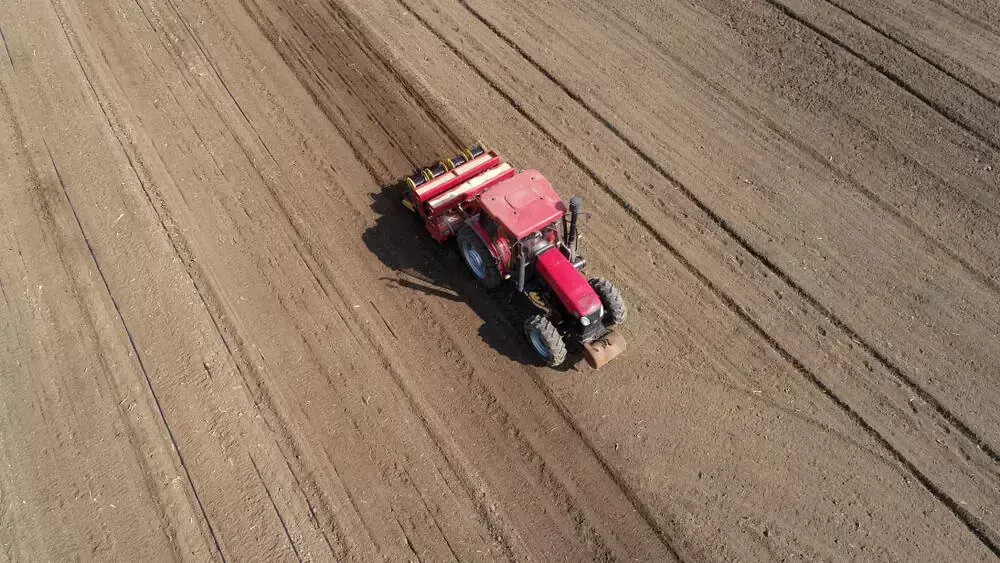
We suggest cleaning your tractor first by removing all your personal belongings, especially if you hired professionals to transport it for you or if you sold your tractor to someone else.
Washing your tractor and covering any vulnerable pieces are also recommended.
You must also drain the tanks after detaching the machine’s batteries and check the tractor’s condition.
Lastly, take photographs of your tractor before the transport as a shred of evidence about its current condition, in case something happened to it during transport.
5) Get Professional Help
Getting professional help could be your option if you don’t want any hassle transporting your tractor because the transport company will take care of everything for you.
They’ll provide an experienced driver to ensure the safe delivery of your tractor. You won’t also need to learn how to load and unload your tractor because the shipping manager and the driver will take care of it.
They will also prepare necessary permits to lawfully transport your heavy equipment from state to state or even overseas.

 Share on Facebook
 Share on LinkedIn
 Share on Twitter
 Dave C.
  Courtney J.
  Jeff D.
  Maria L.
  Google
  Instagram
  BBB
BBB