Car export - the Definitive Guide About Car Export From the US


Moving a car from one country to another is a confusing process involving many documents, each more important than the last.
It's overwhelming, though the process can get much simpler if you employ a shipping company. Still, it's best to have a clear idea of the procedure to grasp what's happening at all times.
So, here's a definitive guide to everything you'll need to know when exporting a car from the US.
The Basic Requirements For Exporting A Car
There are several steps involved when exporting a car to a foreign country. First, you need to get an idea of the departments concerned.
The primary responsibility falls under the US Customs and Border Protection, the Department of Homeland Security subsidiary. They're responsible for processing all forms and inspecting the car to ensure it's eligible for export.
They will also ensure that your vehicle isn't breaking any international standards.
All your documents must be submitted to them within 72 hours before shipping. They also hold the right to declare something unavailable if it's found to have any hazardous materials. You may be penalized if your vehicle has to be withheld, so it's crucial to have it cleared beforehand.
You'll also need a United States Postal Service Customs form, though the division isn't directly involved in the procedure. The Federal Maritime Commission should also license your hauler.
Every step is essential because all countries have their requirements, particularly regarding fuel and emission standards.
- Exporting a car from the US typically costs $1,000–$5,000 total, covering port fees, carrier charges, container or RoRo service, and destination customs duties.
- Transit time for US vehicle exports ranges 10 days to 4 weeks, depending on destination country, chosen shipping method, and port processing times.
- US Customs and Border Protection requires all export documents — including title, ID, and EPA/DOT compliance forms — submitted at least 72 hours before vessel departure.

Getting A USPS Customs Form
A USPS form is necessary, no matter what you're mailing. It's available at any post office or online.
Once you fill it in carefully, you'll submit it to Customs and your other documents.
New Deals are now available for shipping all types vehicles using our vetted reliable shippers. Compare price estimates & Unlock up 25% off.
What Are the Required Documents?
Once you've settled on a trustworthy hauler, you need to get all the required documents together:
- The Manufacturer's Statement/Certificate of Origin: if you have a brand new car, one that hasn't been registered before, or custom construction, you must submit the original MSO and two copies.
- Certificate of Title: you need this to submit proof of ownership; it's the most important document on the list.
- Bill of Sale: if you don't have a title or MSO, you must submit this as evidence that the vehicle legally belongs to you.
- Passport or EIN.
- Lien Release Documents: if you still haven't paid off your car, you'll need written authorization from the lien holder allowing you to take it to a foreign country.
- Power of Attorney: an export POA is necessary to signify you've given someone legal power in proceedings.
You might also need to submit an EPA form for emissions compliance, a DOT form from the Department of Transport for safety compliance, and a completed US Customs and Border Protection Vehicle Export Cover Sheet.
All these documents must be submitted at least 72 hours before export.
Exporting A Financed or Leased Auto
Exporting a financed car might be slightly complicated since, in many cases, lienholders don't want the vehicle to be in a foreign country.
The best you can do in this situation is look into a loan in the country you're moving to, use it to pay off the lease, and obtain a lien release document.
Preparing Your Vehicle for Send Out
Having a car hauled into another country is sensitive because each has its rules and regulations. The essential part is complying with fuel and emission standards.
Countries like Japan already have high emissions levels and have strict regulations. Similarly, New Zealand has your car inspected by a separate department to ensure its cleanliness. If dirt is on or inside, they take it to a quarantine facility to decontaminate it.
When you're preparing your car for export, make sure to have it cleaned thoroughly. Try to keep it empty: it's better not to add extra luggage inside.
Make sure the brakes are working, and the tire pressure is adequate. The vehicle needs to be in good condition to avoid trouble at Customs or while hauling.
Finally, don't there shouldn't be any gas or fuel inside. The shipping company will have to empty it before exporting anyway.
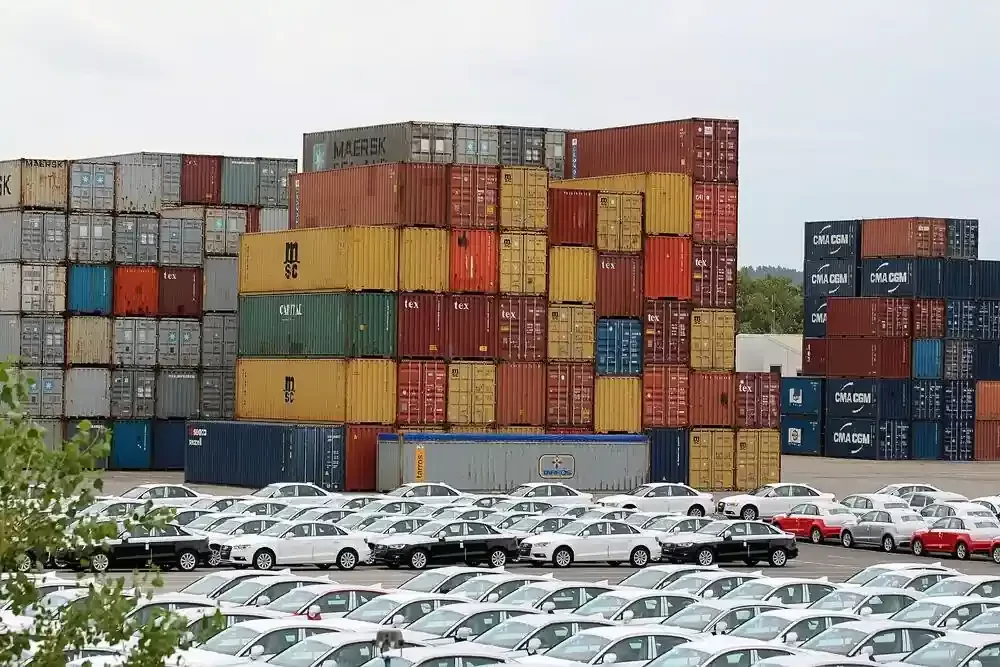
Understanding the Automated Export System
The US has the AES to keep track of all exports exiting the country. Before exporting, you'll fill in the shipment information, which is known as Electronic Export Information (EEI).
When filling in the USPS Customs form, you'll also need to add the Internal Transaction Number (ITN), which acts as a passport for the car.
The Delivery Methods Available
Once you've submitted all your documents, you'll inform your hauler how you want the car to be hauled. Your choice depends on how much you're willing to pay.
First, the most fool-proof method is a 20ft. container. It's the standard for cars and fits one, though it's also expensive. Alternatively, you can opt for a 40ft container if you have two vehicles or someone who shares the destination. It may take longer, but it'll be cheaper.
One of the most popular methods these days is RoRo shipping, where vehicles are strapped under freight trains. Since there are no container or transportation costs at ports, it's less costly than the other two and just as safe. It's also quicker since there's no container to be held up.
How Long Does Hauling Take?
This largely depends on where the car is going. The standard time is ten days, which can take up to a month. This factors in the days it takes to take your vehicle to the port, the journey itself, and the wait once it reaches the destination city.
How Much Does the Process Cost?
Several costs are considered in the process: you'll need to pay for storage, carrier, port use, and container.
There are also import duties, taxes at Customs, and fees for registering the vehicle for on-road use in the new country. And you'll need to pay your hauler.
Bottom line: The total cost can range from $1000-$5000. Prices will vary mainly depending on your beginning and ending cities.

A Quick Overview
Now that you have the details of the process, here's a quick overview:
- Choose a reliable, registered shipping company.
- Get all your documents together.
- Prepare your car, making sure it's clean and fully functional.
- Choose a delivery method.
- Please pick up your vehicle once it reaches its destination.
Going for a reliable hauler helps ensure the process goes smoothly without any extra hassle. Try to prepare all your documents at least a month before export, so there's time to remedy any issues.
Frequently Asked Questions
What is the process for exporting a car from the USA?
Exporting a car from the USA starts with proving vehicle ownership, preparing export documents, meeting U.S. Customs filing requirements, and confirming the destination country's import rules. Most vehicles are shipped using Roll-on/Roll-off (RoRo) or container service, depending on value and destination. If you're researching how to export a car from USA, working with an experienced transporter simplifies documentation and customs coordination. Learn more about international car shipping.
How can I prepare my vehicle before international export?
Start by cleaning the vehicle, documenting its condition with photos, removing personal belongings, checking for fluid leaks, and leaving only the recommended fuel level required by your carrier. Disable alarm systems if requested and ensure the vehicle is mechanically operable unless special loading has been arranged. Proper preparation speeds port inspections and reduces the risk of shipping delays.
How much does it cost to export a car from the United States?
Car export costs vary based on destination country, shipping method, vehicle size, port fees, customs charges, and inland transport. RoRo shipping is usually the most affordable option, while container shipping provides additional protection for luxury, classic, or high-value vehicles. Fuel surcharges, marine insurance, and destination taxes may also affect the final price. Use an international shipping cost calculator to estimate your total export expenses.
Is RoRo or container shipping better for exporting used cars from USA?
For most standard vehicles, RoRo shipping is the most economical and widely available choice because vehicles are driven directly onto the vessel. Container shipping offers greater protection from weather and handling, making it preferable for classics, luxury vehicles, modified cars, or multiple vehicles shipped together. The best option depends on your budget, destination, and vehicle value. See our guide to RoRo shipping costs.
Should I purchase additional insurance when exporting my car?
Yes. While ocean carriers provide limited liability under their shipping terms, many exporters choose marine cargo insurance for broader financial protection against covered damage or loss during transit. Coverage options vary by vehicle value, destination, and shipping method, so review policy limits carefully before departure. Additional insurance is especially worthwhile for collector, luxury, or high-value vehicles.
What documents are required to export a vehicle from the USA?
Most exports require the original vehicle title, government-issued identification, bill of sale when applicable, and export documentation submitted to U.S. Customs before departure. Financed vehicles generally require written authorization from the lienholder, while some destinations request additional compliance or emissions paperwork. Reviewing document requirements before booking helps prevent customs delays. Read more about international car shipping.

 Share on Facebook
 Share on LinkedIn
 Share on Twitter
 Dave C.
  Courtney J.
  Jeff D.
  Maria L.
  Google
  Instagram
  BBB
BBB