How To Transport A Dump Truck: Explained (2022)

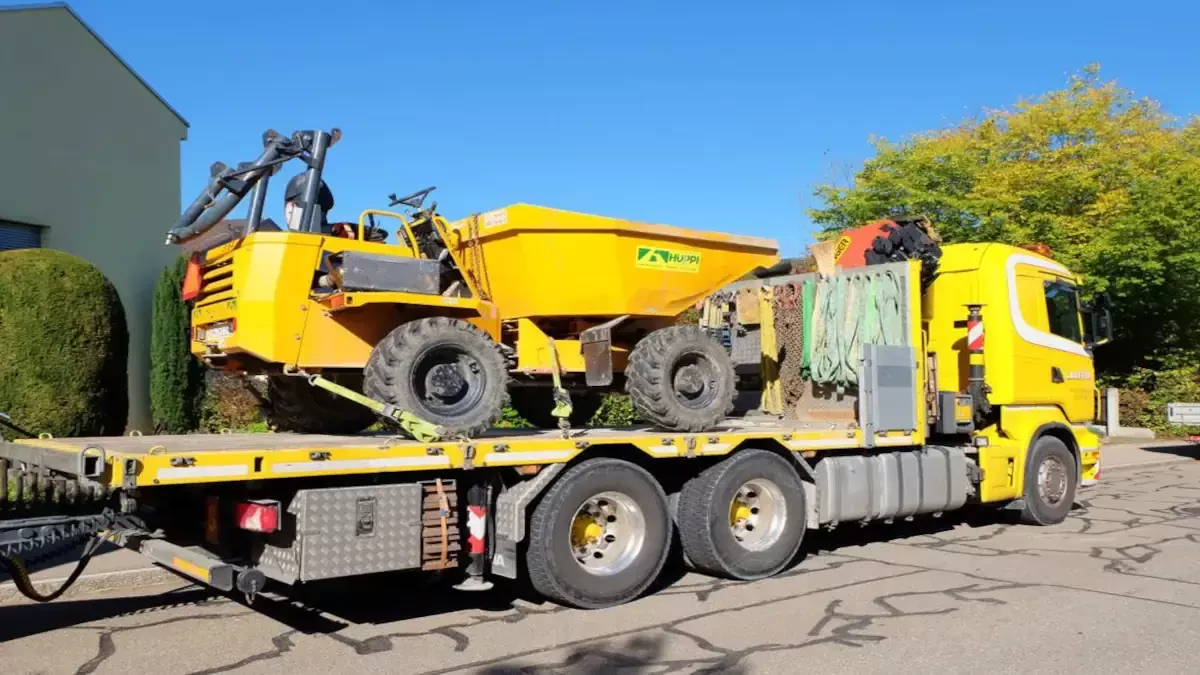
Whether you choose to personally or let qualified transport companies transport your dump truck, there’s a simple process you must follow. Since dump trucks aren’t legally allowed to traverse highways, you must use an effective shifting method to haul dump trucks from one job site to another.
But how, you ask? Keep on reading to learn how to relocate a dump truck – in a hassle-free, more cost-effective, and legal way.
How Much Does It Cost To Transport A Dump Truck?
Typically, transporting/shipping a dump truck may cost at least $1.40 per mile for 1-500 miles. However, the shipping cost varies depending on the trailers used to deliver the car, your dump truck’s size and dimensions, and the mileage needed.
The delivery time frame and fuel economy also affect the shifting cost; the faster you want the heavy construction equipment delivered, you’ll have to pay more than the usual delivery charge.
When relocating large trucks over long distances, you can cut the cost by disassembling some parts of the heavy machinery and relocating it ahead of time through another trailer, like a step-deck or an RGN. The delivery route also affects the overall hauling cost, so you’ll have to pay more if the long-distance delivery route requires specific permits.
Do You Need Permits or Licenses?
Yes, you might need permits or licenses if the heavy equipment exceeds the dimensions required by local and state laws and regulations. You might also need permits if you plan to ship the heavy equipment when it’s not empty. Always ensure that you check every delivery detail with your local DOT office.
This is where professional haulers come in handy. If you let the company transfer dump trucks, they will take care of every permit or license needed to transfer them. The permits and licenses required vary depending on the state or locality you plan to ship a dump truck.
- Dump truck transport starts at $1.40 per mile for routes under 500 miles, with total costs rising for oversized or articulated units requiring RGN trailers.
- Regional dump truck shipments typically take 2–7 days; long-distance moves extend to 7–14 days depending on routing, permits, and escort requirements.
- DOT oversize permits are required when a dump truck exceeds standard height, width, or weight limits; loads over 12 ft wide trigger mandatory pilot car escorts per state regulations.
New Deals are now available for shipping all types vehicles using our vetted reliable shippers. Compare price estimates & Unlock up 25% off.
Final Thoughts
To move a dump truck, you must choose the best trailer, secure necessary permits, and adhere to all local and state laws. Then, prepare the standard dump truck before shifting it and ensure that every part of it is secure. If you want hassle-free dump truck hauling, check out A-1 Auto Transport. We provide experienced drivers and knowledgeable staff to ship trucks over long distances.
References:
Frequently Asked Questions
What is the best way to transport a dump truck?
The best way to transport a dump truck is to match the trailer to its loaded dimensions, axle weight, ground clearance, and operating condition. A lowboy or removable-gooseneck trailer often suits tall, heavy, or off-highway units, while some smaller road-going trucks can use a step-deck or flatbed. An RGN lowers the front of the deck for a shallower drive-on approach. A1's dump truck shipping service covers trailer options for different truck configurations.
Do dump trucks require special permits for transport?
As of September 16, 2026, a dump-truck load generally needs an oversize or overweight permit when its loaded dimensions or weights exceed limits on the planned route. On the National Network, the federal commercial-vehicle width standard is 102 inches, while the federal government does not issue oversize or overweight movement permits. States issue those permits and also set route-specific conditions, including height and escort requirements. That means there is no single nationwide pilot-car threshold that applies to every dump-truck shipment.
How should a dump truck be secured on a trailer?
For a dump truck weighing 10,000 pounds or more, federal cargo-securement rules require at least four tiedowns when it is transported as heavy wheeled equipment. The tiedowns must restrain movement forward, rearward, sideways, and vertically, with attachment points near the front and rear or at points designed for securement. Accessory equipment must be lowered and secured, and an articulated truck must be restrained so it cannot articulate during transit. The carrier also needs properly rated and serviceable securement equipment.
What preparation is required before shipping a dump truck?
Before shipping a dump truck, empty the bed, lower it fully, secure the tailgate and loose accessories, clean off loose debris, and report leaks or operating problems. Give the carrier accurate transport-position dimensions and weight, because trailer selection and permit planning depend on the truck as it will actually travel. If the truck cannot roll, steer, or brake normally, disclose that before loading so suitable equipment can be arranged. A1's heavy-equipment preparation guide covers additional pickup steps.
Can you drive a dump truck to its destination instead of shipping it?
A road-legal, operational dump truck can be driven to its destination when the vehicle and planned route meet the applicable operating, size, weight, registration, and licensing rules. Trailer transport is usually the practical choice for off-highway, non-running, oversized, or unusually heavy trucks, and it also avoids adding road mileage to the equipment. When the truck will be hauled rather than driven, the carrier selects the trailer and loading method around its actual condition and dimensions. A1's truck shipping service explains broader commercial-truck transport options.
1) Select A Transport Method

The first thing you must do before any dump truck transport is to choose the best long-distance transport method for your dump truck’s size, weight, and final destination.
If the dump truck has a horizontal hydraulic ram or vertical hydraulic ram mounted between the dump body and the cab, and it has a dump chassis, then a flatbed [1] trailer is your best choice to haul it.
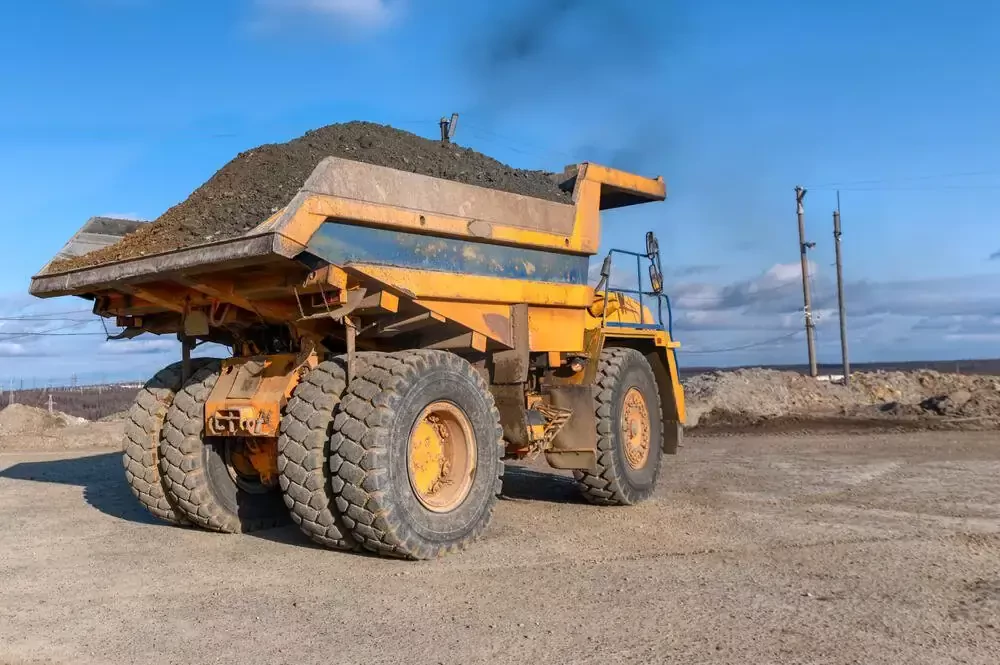
Flatbed trailers are excellent for shipping standard dump trucks, side dump trucks, and off-highway trucks (haul trucks with diesel-electric powertrains, conventional steering, and rigid frame rails). Some smaller dump trucks can also fit a step-deck trailer.
However, some dump truck owners opt for a lowboy or removable Gooseneck trailer (RGN trailer) because of their dump truck’s size and length.
An RGN trailer provides greater clearance than flatbeds, so they can transport large or articulated dump trucks, especially those that exceed recommended loads and dimension regulations.
Thus, we recommend RGN trailers if you want to transport construction equipment, such as excavators, forklifts, wheel loaders, skid steers,
2) Prepare Your Vehicle
Whether you choose flatbed, lowboy, or RGN trailers, you will still need to prepare the heavy equipment before the shipment.
Some large dump trucks may require you to disassemble some of their parts before shipping.
Hence, ensure you have checked all preventive measures before the transport, such as the dump truck’s size, length, and height.
Shipping the disassembled large dump truck’s parts on a flatbed trailer is less expensive and safer.
Large dump trucks, especially off-highway trucks, tend to attract unwanted debris during the operation.
We recommend cleaning your dump truck before the transport to avoid any large pieces of dirt or loose cargo that may fall off the dump truck.
3) Secure Your Dump Truck
Ensure all parts are well-secured using heavy metal chains or tie-down straps in at least four spots on the trailer.
Load your dump truck on an even ground and evenly spread its weight onto the dump trailer.
Safely remove all unnecessary loads in the dump truck and check all the screws, tires, and small parts of the truck.
Ensure that the dump truck is on a neutral break or its engine is not running. If you opted for open-air shipping, ask the hauling company if you can put a tarp over your dump truck to protect it from dirt and hazardous debris during transport.
4) Know The Rules & Regulations

Knowing the rules and regulations for shipping heavy equipment is also best to avoid problems.
Always work with your Department of Transportation (DOT) [2] offices before the transport.
You may contact them and ask for permits and licenses that need to be secured or just let your hauling company secure the necessary permits for you.
Since standard dump trucks typically fall within (almost) all state dimensional regulations, they are generally easier to haul than larger trucks, such as off-road dump trucks and articulated dump trucks.
When articulated dump trucks exceed dimensional regulations, planning the delivery route and securing proper permits is necessary.
5) Get Professional Help
Generally, professional shippers or haulers provide everything you must secure before the transportation.
Professional hauling companies provide drivers with extensive experience and experienced operators, so you won’t have to worry about your dump truck’s safety. They also offer insurance, so you can ship your dump truck without worrying about damages.
Professional dump truck transport services will also get the necessary permits for you.
They work with DOT offices and adhere to rules and regulations set by the state where your dump truck would be delivered.

 Share on Facebook
 Share on LinkedIn
 Share on Twitter
 Dave C.
  Courtney J.
  Jeff D.
  Maria L.
  Google
  Instagram
  BBB
BBB