Why Your Shipped EV Arrives with an Empty Battery


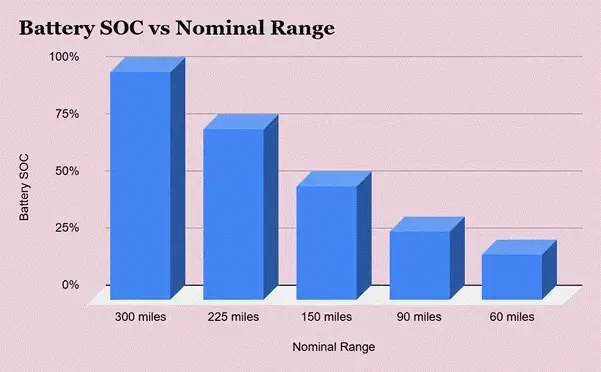
If you’re eagerly waiting for the arrival of your Porsche Taycan, Lucid Air, or Tesla Model Y/3, you may be eager to experiment with its 350 (or higher) mile range. You may therefore be surprised to find that your newly shipped EV arrives at your dealership with between 80 and 100 miles remaining, and that your first journey isn’t home, but rather to an official charger. Take heart; there’s nothing wrong with your battery's manufacturing or your dealership. All EVs are shipped this way primarily owing to international and federal transport guidelines and safety standards that require large lithium-ion batteries to be transported at a reduced State of Charge (SoC). Typically, batteries are delivered at 20% to 50% SoC for safety reasons and to protect vehicles against vampire drain, a situation in which a car battery can completely die while sitting in its trailer. Companies like Tesla, for instance, deliver vehicles at under 50% capacity, a fact that can frustrate drivers who expect to enjoy a long drive immediately upon pick-up of their new car.
Driving, Storage, and Transport SOCs
Before delving into the precise reasons why low battery charge is vital for safety during transport, it helps to differentiate among the types of SoC. Driving SoC is the amount of energy that is available to the owner for driving. Storage SoC is centered on preserving an EV’s battery when it is not in use. Finally, transport SoC focuses on reducing the amount of stored energy in a vehicle during transport. Vehicles that arrive with what a new owner might deem a “low” charge are actually at a very typical range for the logistics operation responsible for transporting it across the globe.
New Deals are now available for shipping all types vehicles using our vetted reliable shippers. Compare price estimates & Unlock up 25% off.
Standard Transportation SoCs
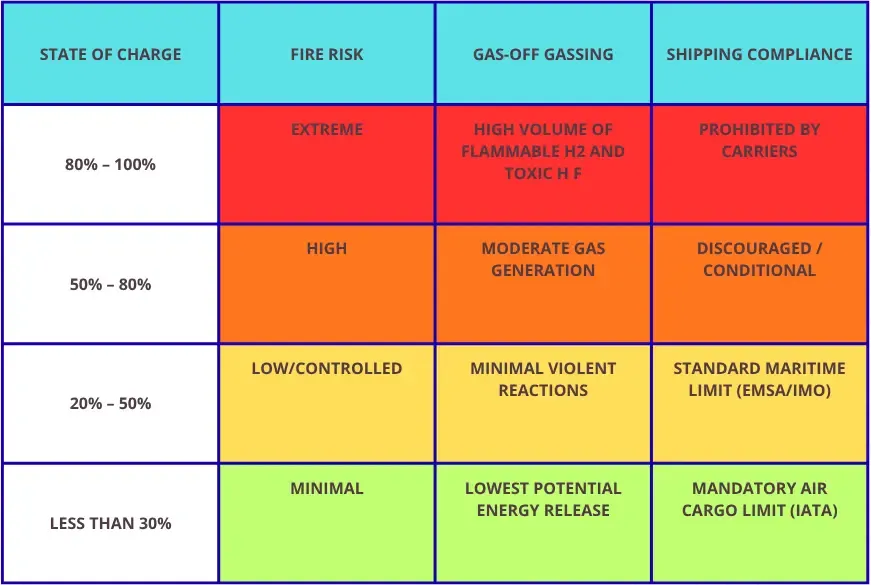
Shipping companies avoid transporting EVs with a high or full state of charge for three main reasons: safety, the violent nature of chemical fires, and logistical limitations in maritime environments. Maritime governing bodies such as the U.S. Department of Transportation (DOT/PHMSA), the U.S. Coast Guard (USCG), the International Maritime Organization (IMO), and the European Maritime Safety Agency (EMSA) require EVs to be shipped at 20% to 50% SoC, while global air transit rules require a maximum threshold of 30% SoC. Domestic road transport, meanwhile, typically imposes a 20%-50% range, though requirements may vary.
Why Shipping Companies Avoid Transporting EVs with High or Full SoC
There are numerous reasons why shipping companies deem high or full SoCs to be unsafe for transport. Firstly, lithium-ion batteries can be unstable at high charge states. When a cell is charged above 50%, the anode contains the maximum lithium content, which means that the temperature needed to trigger thermal runaway is lower. Once thermal runaway occurs, temperatures rise to 1,832ºF in seconds, producing gas, fire, and sometimes explosions. Secondly, EV battery fires can reach temperatures of around 2,192ºF, which is much higher than temperatures reached by internal combustion fires. A fully charged battery can release two or three times as much total heat energy during combustion as the same battery at 30% SoC. EV fires vent toxic, explosive gases before catching flame, creating toxic clouds and gas pockets that can pool at ceiling level, risking sudden blast explosions. Finally, a fire raging at sea is logically much more difficult to put out than one on land, owing to the high water needs and the risk of the vessel capsizing from the weight of the water required to cool a high-charge EV fire. Capping battery levels between 20% and 50% allows shipping companies to eliminate the excess chemical potential energy that can turn a single-cell defect into a major shipping disaster.
New Rules in 2026
In 2026, various changes were made to the regulations governing battery transport. The 30% SoC limit for air transport isn’t entirely new, as lithium-ion batteries shipped on their own, known as UN 3480, were already subject to the limit. However, as of 1 January 2026, reduced SoC requirements were extended to additional types of lithium-ion batteries and battery-powered vehicles transported by air. Special Provision A331 provides a route to carry the vehicle's lithium-ion or sodium-ion battery at above 30% SOC, provided the required State approvals and other conditions are met. The US has its own relevant regulations, which are administered by the Pipeline and Hazardous Materials Safety Administration (PHMSA). Under the US rules, UN 3480 lithium-ion batteries transported by air are generally subject to the 30% SOC limit. Ocean transport was also impacted by an amendment, the IMDG Code Amendment 42-24, which introduced dedicated UN classifications for battery-powered vehicles, including UN 3556 for lithium-ion battery-powered vehicles.
The Impact of Fires in the Early 2020s
A series of fires (which did not involve EVs) in the early 2020s significantly affected how vehicle and battery fires at sea were viewed. One of these was the Felicity Ace disaster of 2022. The Felicity Ace was a large roll-on/roll-off cargo ship destined to transport vehicles. On one voyage, it caught fire while carrying around 4,000 luxury vehicles, burning for nearly two weeks before eventually sinking. One year later, another massive vehicle carrier, the Fremantle Highway, caught fire off the Dutch coast while transporting some 3,783 vehicles. Although EVs were initially blamed for the blaze, investigations revealed that the fire actually originated far from where the EVs were located. In fact, the nearly 500 EVs on board were mostly recovered intact. IN the same year, a vehicle carrier, the Grande Costa d’Avorio, caught fire in New Jersey, resulting in the death of two firefighters. Investigations by the U.S. National Transportation Safety Board revealed that the fire was caused by an old, fuel-powered Jeep Wrangler used as a “pusher truck” to move vehicles up the ship’s ramp. Although EVs were not to blame for these tragedies, the difficulty of extinguishing the fires gave rise to stricter regulations, including those governing SoC limits.
The EV Fire Myth
The myth that EVs are more likely to catch fire than conventional ones has been debunked by evidence. Data gathered by the National Transportation Safety Board and the Bureau of Transportation Statistics show a significant disparity in ignition rates. Fire rates per 100,000 vehicles sold stand at 25 for battery EVs and 1,530 for vehicles with internal combustion engines. The table below compares fire rates for EVs, gas/diesel vehicles, and hybrid vehicles.
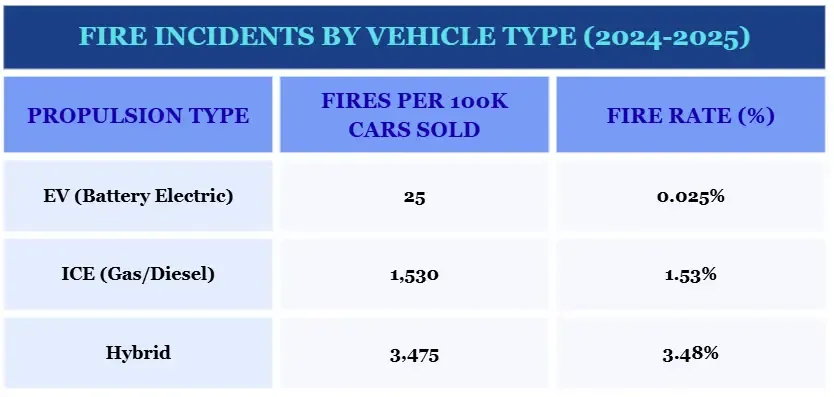
Mileage-based comparisons provide a clearer assessment of actual risk, because they are based on actual vehicle use. The latest NHTSA analysis reveals that it takes around 7.2 million miles of EV travel to trigger one fire, compared to 18,000 miles for gasoline vehicles. This amounts to a 400x difference in per-mile fire frequency.
The Gradual Loss of Charge
EVs lose charge not only during transportation but also at the many stages between manufacture and handover. A typical EV manufactured abroad and destined for a US dealership, for instance, may spend over 70 days between end-of-line inspection and last-mile delivery. For this reason, customers often have to wait months for a purchased vehicle to be ready for pickup. A vehicle may spend up to 10 days at the factory gate, 45 days being transported via ship, and up to 60 days at the import terminal and vehicle processing center. Finally, it may take up to 70 days for vehicles to be loaded onto carrier trucks and transported to dealers. Total lead times for domestic transport hover between seven and fourteen days, for continental transport between fifteen and thirty days, and for intercontinental transport between forty-five and seventy-five days. The longer the logistics chain is, the more vital SoC management becomes.
How Does a Battery Go Empty?
EVs generally have a reserve, meaning that even if the battery displays 0%, it may still contain additional energy. When a dashboard displays 0%, about 3% to 5% of the emergency chemical reserve remains in the pack so the car isn’t completely unresponsive when it reaches zero. It also serves to keep individual cells above their critical minimum threshold. Even so, cushion reserves can only last so long.
Vampire Drain
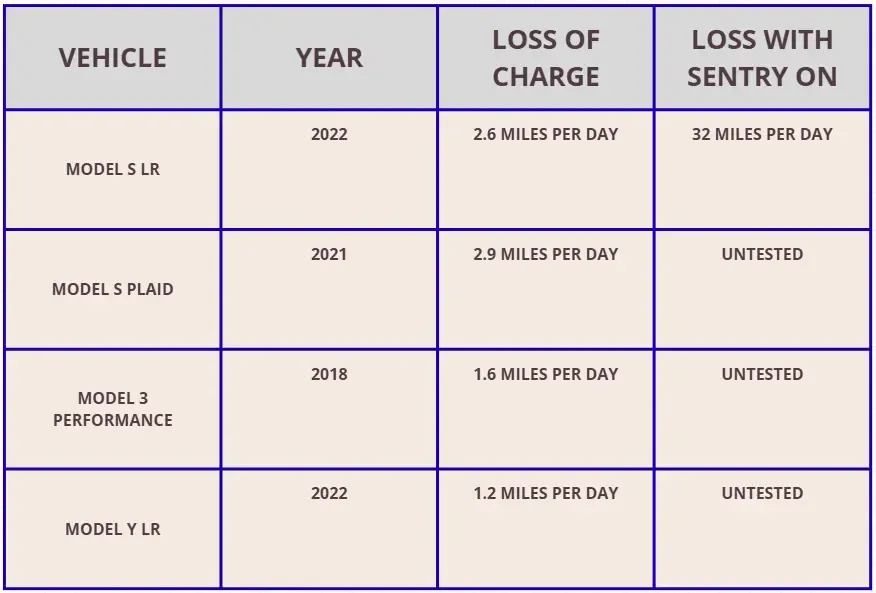
Leaving vehicles at or near 0% for days or weeks can push cells below the safe voltage range, resulting in capacity loss or permanent battery damage. EVs experience “vampire drain” even when parked because their cellular connections, keyless entry systems, onboard computers, and temperature-monitoring systems draw a small amount of energy. The rate of vampire drain can vary considerably depending on the car model (and the software it contains), even among cars from the same brand. TeslaTap conducted tests on specific Tesla models, finding that they could lose anywhere between 1.2 miles per day of range (in the case of the 2022 Model Y LR) and 2.6 miles per day (in the case of the 2022 Model S LR). Vampire drain is also higher when a car’s Sentry Mode (featuring external cameras that monitor the area around a car) is on.
Solid Electrolyte Interphase (SEI) Breakdown
Another issue is solid electrolyte interphase (SEI) formation, a protective yet degrading process that occurs on the anode surface in a lithium battery. During each charging cycle, lithium ions move from the cathode to the anode through the electrolyte. As lithium ions interact with the electrolyte, they form a solid layer (the SEI). This layer stabilizes the anode surface, preventing further interactions with the electrolyte. When an EV’s battery charge is excessively low, the SEI begins to dissolve into the liquid electrolyte. When the vehicle is charged, the battery must expend energy on reforming the SEI, which can lead to irreversible capacity loss and degraded health.
Copper Dissolution and Short Circuits
When a cell’s voltage drops to very low levels (at or below 1.5V), the copper current collector on the anode begins to dissolve into the electrolyte. When the vehicle is eventually recharged, that dissolved copper precipitates out as microscopic, sharp metal spikes called copper dendrites. These dendrites puncture the thin separator wall, creating an internal short circuit, a major cause of future thermal runaway fires. Copper dissolution, alongside SEI breakdown, is why a SoC 20% to 50% is considered the “sweet spot” for avoiding issues like extreme fire temperatures, violent gas off-gassing, vampire drain, copper dendrites, and permanent battery damage.
What Tesla, Rivian and Ford Tell Customers
Customers sometimes leave comments in forums, expressing disappointment at receiving a vehicle, such as a Tesla, with less than 50% charge. Tesla has done its best to keep purchasers informed, officially announcing: “Due to a new industry policy, your vehicle must be shipped with a max 50% charge – meaning your Model (*) charge status may be lower than our usual standard at your delivery appointment.” To keep customers happy, the company offers new owners of these vehicles 150km of free Supercharging to make up for the limited initial EV range. Rivian, meanwhile, has sought to mitigate the vampire drain problem by equipping its vehicles with a dedicated “Vehicle Shipping Mode,” designed to preserve charge while vehicles are being transported. This mode disables energy-consuming functions, such as Gear Guard motion videos and the Gear Guard alarm. Despite these efforts, numerous owners have complained of repeated 12V battery failures, with some reporting two or more battery replacements within two to three years and significant vampire drain when vehicles are parked. Ford has made a big effort to satisfy customer demand. For instance, its Mustang Mach-E Pre-Delivery Service Record stipulates that vehicles being stored should be charged at 20% to 40% SoC, while those being prepared for customer delivery should be charged to 100%.
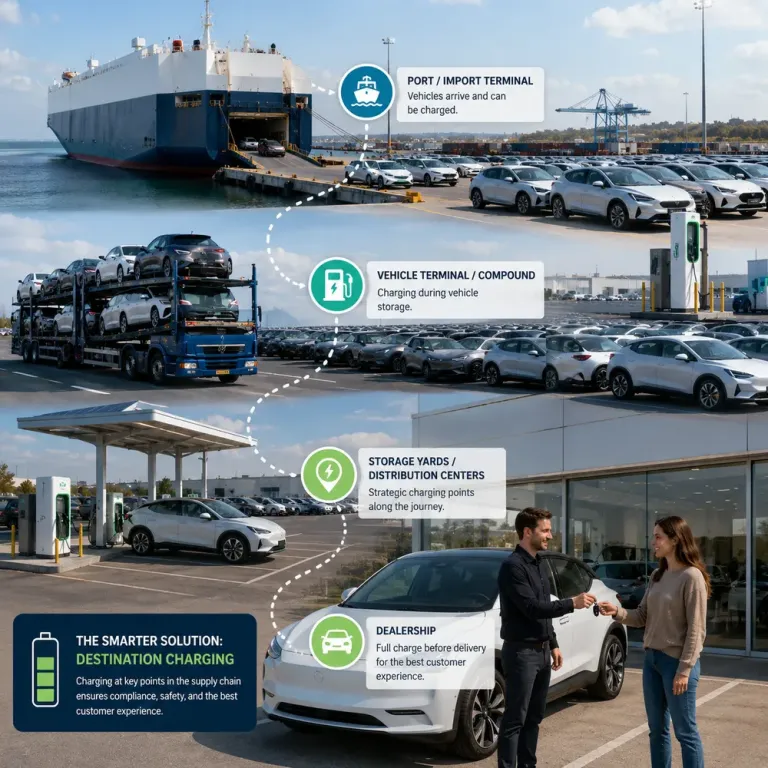
The Industry's Solution May Not Be to Ship Vehicles at a Higher SOC
Individual EV manufacturers cannot skirt their legal duties, nor can they risk safety in the interests of customer satisfaction. One possible solution to the misalignment between legal requirements and customer demand is destination charging, which shifts charging capability to strategic points after or near the end of the vehicle’s transport journey, rather than trying to keep all EVs at a high state of charge during the weeks they spend in the logistics chain. One potential charging stop is the port or vehicle import terminal where cars arrive directly after their sea voyages. Vehicle terminals (or compounds where vehicles are held after leaving their ports) can also serve as charging stops, as can storage yards, distribution centers, and, finally, dealerships. For instance, dealers can quickly bring vehicles to a full charge immediately before a scheduled handover, so customers needn’t waste time supercharging before heading home.
Embracing a Smart SoC Management Strategy
Establishing charging points is just one of many steps that manufacturers can take to keep vampire drain from destroying batteries and to ensure customers are satisfied with the state of charge during delivery. A sound, multifaceted SoC management strategy must include additional efforts, including setting stage-specific SoC targets for factory release, port handling, ocean or rail transport, import processing, dealer storage, and final handover. Secondly, at every handoff, records should be taken of SoC, battery temperature, location, date, time, odometer reading, charging events, and any observed faults. Additionally, telematics and scheduled inspections can detect excessive vampire drain and vehicles whose charge has fallen so low that movement may become impossible. If vehicles have a storage mode (as with Rivian EVs), it should be activated. It is also vital to provide compatible charging infrastructure at factories, major terminals, processing centers, and dealerships. Procedures should be provided for damaged or non-responsive vehicles. Predictive software can also determine when top-ups would most likely be needed, taking into account factors such as weather and route distance. Providing vehicles with optimal storage conditions, including shade, can help ensure that batteries aren’t charged outside approved temperature ranges. Finally, connected storage systems can monitor a vehicle’s SoC and automatically stop charging when a specific target is reached.
Conclusion
Online forums are flooded with comments about customers’ dissatisfaction at receiving their EVs with a lower-than-expected charge. Many wish to take their new vehicle for a spin, driving on highways and other long-distance roads without worrying about running out of battery. However, global and national regulations generally stipulate that electric vehicles should be shipped with a relatively low charge. The main reason is safety. High-charge lithium-ion batteries pose major challenges in the event of a fire, particularly when vehicles are transported by ship. From a customer’s perspective, however, EVs can spend a long time in the logistics chain, going through stages such as transport, terminal stops, storage in compounds, and transit to dealers. All this can result in vampire drain. Sometimes, the issue is so profound that cars barely have enough battery to move. Top EV manufacturers such as Tesla, Rivian, and Ford all acknowledge that a lower state of charge can pose a problem for customers, and they are doing their best to keep customers informed and mitigate the issue, for instance, Tesla by issuing a Supercharging credit. The industry can help ensure safety while preventing excessive drain by implementing strategies such as destination charging at ports, terminals, storage yards, distribution centers, and dealerships. They can also establish appropriate SoC targets for different logistics stages, record SoC at every handoff, monitor vehicles remotely, use storage modes, and provide infrastructure where vehicles need it most.
Resources:
https://staging.a1autotransport.com/interstate/
https://www.phmsa.dot.gov/sites/phmsa.dot.gov/files/2024-11/Lithium-Battery-Guide-2024.pdf
https://gard.no/en/insights/lithium-ion-battery-fires-industry-guidance-conference-address-risks/
https://www.blazestack.com/blog/how-many-ev-fires-in-2023-2024
https://www.logisoft.io/glossary/finished-vehicle-logistics
https://teslatap.com/articles/vampire-drain/
https://pubs.rsc.org/ra/article/8/58/33414/619294/Investigation-of-a-commercial-lithium-ion-battery
https://insideevs.com/news/669963/tesla-plays-safe-ships-evs-lower-state-of-charge/
https://www.go-parts.com/garage/voltage-converter-wiring-harness-rivian-r1s-rivian-r1t-2022-2024
https://www.macheforum.com/site/attachments/mach-e-pre-delivery-checklist-pdf.13265/
https://www.cevalogistics.com/en/what-we-do/finished-vehicle-logistics/vehicle-storage

 Share on Facebook
 Share on LinkedIn
 Share on Twitter
 Dave C.
  Courtney J.
  Jeff D.
  Maria L.
  Google
  Instagram
  BBB
BBB