What is a Heavy Load Carrier?

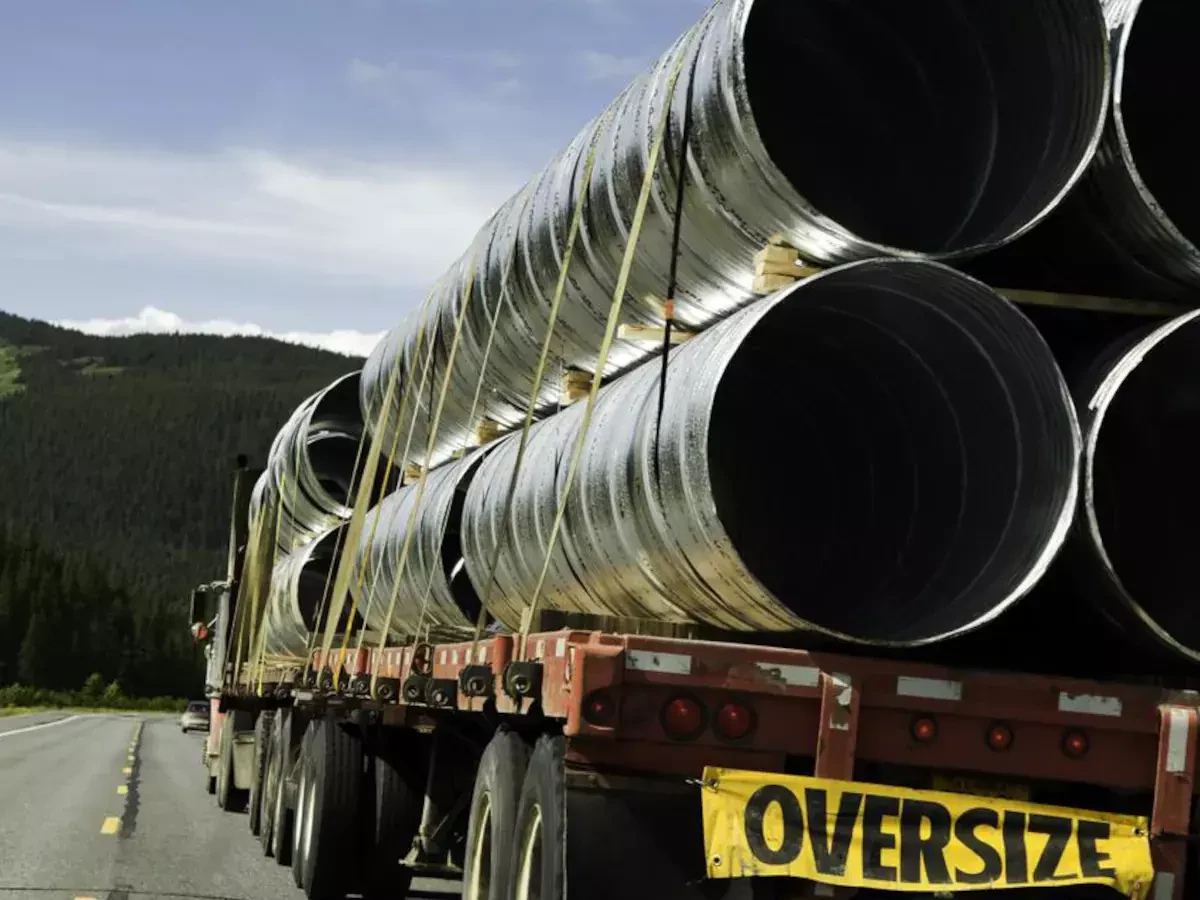
There are several ways to ship large and heavy loads. Many oversized items can be moved by air, ground, or sea. But when it comes to extremely large items that need to be moved overseas, the only option is a specialized type called a load carrier (also called a lift ship).
These massive ones can handle loads that are too heavy for planes and could damage the structural integrity of conventional boats.
These are some of the largest vessels in the world, measuring as much as 1300 feet long and 200 feet wide. They can haul cumbersome items like construction and mining equipment, industrial machinery, and other vessels.
Types of Heavy Load Carriers
There are four main types of heavy lift vessels:
Semi-Submersible Vessels
These use ballast water tanks to take on water intentionally. This lowers the boat more deeply into the water until the upper deck is submerged a few meters below the water's surface.
This is done so that goods can be loaded onto the submerged deck by floating them directly over their intended space on the deck. Once correctly positioned, the ballast water is pumped out until the vessel's deck rises above the water for a safe voyage.
Dock Ships
Dock ships are similar to semi-submersibles in design and function, but they use large side panels on the port and starboard to act as reservoirs for ballast water. This allows it to lower its upper decks into the water so cargo can be floated onto the boat before the ballast water is released and it lifts back up to prepare for passage.
The primary type of dock one carries is other ships. Dock ones are handy for repairing vessels that cannot move or get to dry docks. Repairs can be made to vessels while on it, so they can even serve as an alternative to dry docks entirely.
- Heavy load carrier transport costs $3.50–$10.00 per mile, with rates driven by load dimensions, axle count, permit complexity, and required escort vehicles.
- Loads exceeding the federal 80,000-pound limit require state-issued oversize permits; multi-axle configurations can legally move over 200,000 pounds with proper approval.
- DOT and FMCSA regulations mandate route surveys, bridge clearance checks, and pilot cars for shipments exceeding standard width, height, or weight thresholds on public roads.

Open-Deck
Unlike semi-submersibles and dock ships, open-deck don't require their load to be floated into position on deck. Open-deck can be placed on the vessel using cranes on the deck or driven onto it using roll-on-roll-off methods (these are also known as ro-ro carriers).
Because open-deck have no deck walls, they export wider than the ship itself; these lift vessels are handy for hauling cranes, construction equipment, large trucks, yachts, and small boats.
Project Ones
They are highly specialized lift vessels that can carry heavy and oversized, high-value called "project cargo," which is often critical for some industries. This can include pipelines, bridge and crane sections, and sections of industrial units.
Unlike ro-ro carriers, project ones are not designed for wheeled cargo and cannot be floated onboard. Instead, they are equipped with one or more cranes capable of lifting this special, heavy freight on and off the vessel. Most port facilities don't have cranes to handle loads, so they don't have to rely on terminal equipment as other load vessels do.
They are typically smaller than other lifting vessels, but they still have the design to carry hefty loads.
New Deals are now available for shipping all types vehicles using our vetted reliable shippers. Compare price estimates & Unlock up 25% off.
Types of Loads
Heavy-lift vessels handle a large variety. Here are some of the main categories that require special load carriers for proper cargo care during maritime delivery:
- Construction Gear: This includes bulldozers, loaders, cranes, excavators, and concrete mixers.
- Agricultural Tools: Machinery like tractors, combines, harvesters, and others require a capacity larger than regular ones can provide.
- Industrial Machinery: This encompasses various machinery used in manufacturing processes in industrial plants.
- Mining Gear: Mining operations often use large ones, such as drill rigs, dragline excavators, and haul trucks.
- Specialized Equipment: Some types of overweight supplies are specialized, like dredging or equipment for infrastructure or military purposes that conventional ships can't handle.
Load vs. Container and Bulk One
It might be easy to picture a container one while discussing heavy-lifting vessels. Containers (box ships) are among the most significant vessels coming and going from most ports. They have a high load capacity compared to regular vessels; they are incapable of the safe maritime transport of bulky loads that carriers can provide.
Container ones are cargo ships that haul the vast majority of non-bulk freight worldwide in standard-sized, stackable containers. Because they are widely used internationally, container ones are usually highly automated, and newer models can emit zero emissions.
Meanwhile, bulk ones are specially designed to deliver raw materials like iron ore, coal, and grain, although combination carriers can also carry liquid cargo like gas and oil.
The bulk fleet is divided into six major categories based on capacity. These classes are:
- Small-Sized Ships (mostly made up of single-hold mini-bulk)
- Handysize
- Handymax
- Panamax
- Capesize
- Very Large Carriers
Large carriers technically fall into the Capesize category but are generally considered separately. Huge and Capesize ships that travel between the Pacific and Atlantic oceans are too large to traverse the Panama Canal, so they are forced to round Cape Horn on these routes. Some mammoth ore can carry up to 400,000 metric tons.
After World War II, there was a significant increase in international bulk trade, especially between the United States, European countries, and Japan. This resulted in the fleet building larger ocean bulk to meet demand. While these are impressive carriers, the average design speed for huge and Capesize ones is not fast. They have a relatively low fixed-pitch propeller speed and travel at a max speed of about 14.5 knots.
Although there were some tragic bulk sinkings in the 1990s, partly due to outdated and overused ships, today's bulk fleet is subject to many international measures to keep crews and the entire boat safe and ensure proper care. The thorough safety assessment of bulk carriers has never been more robust, with systems like high-level water alarms becoming mandatory on all bulk.

Advanced Technology
The days of only older steam-powered ships for hauling are over. The industry now includes several different types of marine engines for propulsion. The most common propulsion systems for large ones are diesel or bunker fuel (also known as heavy fuel oil).
But steamships still represent a portion of the fleet. Liquified natural gas (LNG) ships have marine engines that use steam turbines powered by high-pressure boilers to power their propellers. Many boilers can run on various fuels, including natural gas, diesel, fuel oil, or coal.
Advanced port technology, improved logistics, and modern loading operations also add a technological advantage to carriers of all types by minimizing port time while taking care of safety.
Conclusion
Heavy load plays a crucial role in today's ever-growing demand. With specialized designs for an entire ship, crews move equipment and machinery overseas that once seemed impossible. And with the oversight of the International Maritime Organization, safety will remain a top priority along with cargo care.
If you want to move any type of load, visit A1-AT. The helpful customer service team can even give you a free quote.
Frequently Asked Questions
What is a heavy load carrier?
A heavy load carrier is a specialized ship designed to move outsized individual cargo that ordinary cargo vessels cannot safely or practically carry. Maritime sources also use terms such as heavy lift vessel and heavy transport vessel for ships with related capabilities. If you mean oversized cargo moved on highways, A1's heavy haul trucking guide covers the land-based service, which uses specialized trucks and trailers rather than ships.
What types of heavy load carriers are used for oversized cargo?
Common heavy load carrier designs include semi-submersible ships, crane-equipped project cargo ships, open-deck or module carriers, and dock or RoRo-style vessels. Semi-submersibles lower their cargo deck with ballast, while project cargo ships may use onboard cranes and module carriers provide large reinforced deck areas. Some vessels combine more than one loading method, so the best type depends on the cargo's dimensions, weight, buoyancy, and the loading facilities available at each port.
What cargo can a heavy load carrier ship transport?
Heavy load carriers transport cargo that is too large, heavy, or awkward for standard container or general-cargo ships to handle efficiently. Typical loads include offshore platforms and FPSOs, port cranes, industrial modules, transformers, yachts, other vessels, and large construction equipment. Machinery moved through A1's overseas heavy equipment shipping service may instead use RoRo, flat-rack, breakbulk, or another suitable ocean method when a dedicated heavy-lift vessel is unnecessary.
How does a semi-submersible heavy load carrier load cargo?
A semi-submersible heavy load carrier uses ballast water to lower its cargo deck below the surface so floating cargo can be positioned over it. Support vessels align the load, then the carrier pumps ballast water out and rises until the cargo rests on prepared supports above the waterline. This float-on/float-off process is used for cargo such as rigs, vessels, and large offshore structures. Wheeled machinery may instead use heavy equipment RoRo shipping and board through a ramp.
How much weight can a heavy load carrier ship carry?
As of September 29, 2026, current published examples range from about 17,250 metric tons DWT for BigLift's Happy D-type heavy-lift vessels to 117,000 tons DWT for Boskalis's BOKA Vanguard. Deadweight is a vessel-capacity measure, so it does not mean one cargo item can automatically weigh that much. Deck strength, stability, draft, seafastening, and loading method determine the practical project limit. Boskalis reports that BOKA Vanguard transported the 91,118-ton P70 FPSO.
How is a heavy load carrier different from a bulk carrier or container ship?
A heavy load carrier is built around outsized individual cargo, while bulk carriers and container ships are optimized for standardized cargo flows. Bulk carriers primarily move unpackaged dry commodities such as ore, coal, or grain, while container ships carry freight in standardized containers. Heavy-load vessels may use reinforced open decks, heavy cranes, ramps, or semi-submersible loading systems. Those features let them transport unusually large project cargo that conventional bulk or container arrangements are not designed to accommodate.

 Share on Facebook
 Share on LinkedIn
 Share on Twitter
 Dave C.
 Courtney J.
 Jeff D.
 Maria L.
 Google
 Instagram
 BBB